

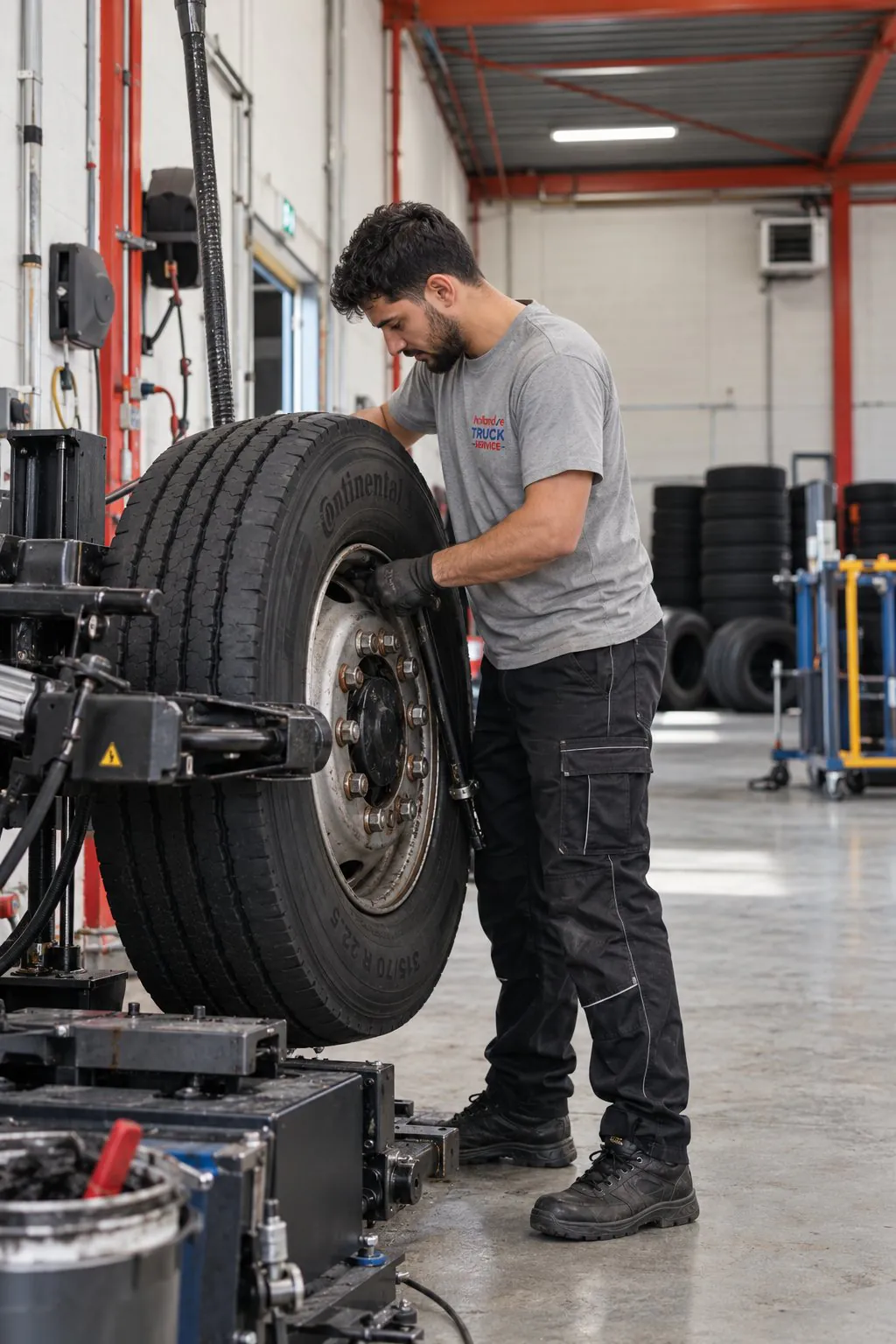
Give the workshop the facts available to the driver
Identify the vehicle and affected wheel position. Explain when the pressure loss was noticed and whether the vehicle was driven afterwards. If the distance or duration is unknown, say so. A rough recollection should not become an exact figure in the job record.
Keep any existing warning message, pressure record or safely obtained photograph with that account. Do not remove a wheel, approach a damaged tyre for a closer image or drive to reproduce a symptom. Where pressure loss or damage is suspected, safe movement requires qualified assessment.
Inspection comes before a repair promise
MICHELIN guidance calls for specialist tyre inspection, including the interior, when assessing a used tyre. The visible puncture alone therefore cannot establish whether repair is suitable.
MICHELIN also warns against reinflating a tyre that has run underinflated without a thorough internal and external inspection. Asking for the quickest inflation or cheapest patch skips the condition assessment on which the next decision depends.
Sources: MICHELIN: operating advice · MICHELIN: truck tyre pressure
Identify the person authorised to approve work
Ask the vehicle provider to name the person handling the incident. Keep a short contact record so the driver and workshop do not have to infer who may make each decision. One person may fill several roles, but those roles should still be clear.
Check the actual lease or rental process with the responsible provider. The contact record does not establish coverage, reimbursement or permission to use a supplier. Record the answer you receive rather than treating an unanswered request as approval.
- Driver: registration, observations and the number for questions about the vehicle.
- Vehicle provider: agreement reference and the contact managing the incident.
- Assessment: who can approve an inspection and how that approval is recorded.
- Further work: who receives the findings and can authorise repair or replacement.
- Handover: who passes the decision to the workshop if the original contact becomes unavailable.
Keep the assessment update with the original report
When findings become available, pass them to the person making the decision. Record the agreed work and retain the resulting paperwork with the vehicle history. If the approval contact changes, make that clear to everyone handling the job.
Call before travelling and agree both the safe next step for the vehicle and the contact who can authorise the proposed work.
Call the workshop